Required Elements of a Valid Tax Invoice
To be eligible for claiming input tax credits, a tax invoice must include the following elements:
- The words 'tax invoice' — displayed prominently on the document
- Supplier's business name — the registered name of the entity making the supply
- Supplier's ABN — the Australian Business Number of the supplier
- Date of issue — the date the invoice is issued
- Description of the goods or services — clear enough for the recipient to identify what was supplied
- GST-inclusive price — either the total amount including GST, or the price per unit and quantity
For invoices of $1,000 or more, the recipient's identity or ABN must also be shown.
The $82.50 Threshold
A tax invoice is required when the GST-inclusive value of a sale is $82.50 or more and the buyer requests one. Below that threshold, a simpler invoice or receipt is sufficient, though many businesses issue a full tax invoice regardless of the amount as a matter of good record-keeping.
Recipient-Created Tax Invoices
In certain arrangements, the buyer — rather than the supplier — prepares the tax invoice. These are known as recipient-created tax invoices (RCTIs). They are only valid where both parties have a written agreement permitting this arrangement. An RCTI must still contain all the standard required elements, with the buyer's details substituted appropriately, and the supplier must not also issue a tax invoice for the same transaction.
Late Payment Interest
Late payment interest is a separate matter from the invoice itself. According to Sprintlaw, interest on overdue invoices cannot be applied unilaterally — there must be a prior written agreement between the parties, such as a clause in a contract or Terms of Trade, before interest can be charged. Best practice is to:
- State late payment terms clearly in any contract or Terms of Trade before work begins
- Reference those terms on the invoice itself
- Issue formal written reminders before escalating a dispute
Recording Tax Invoices in SAE Books
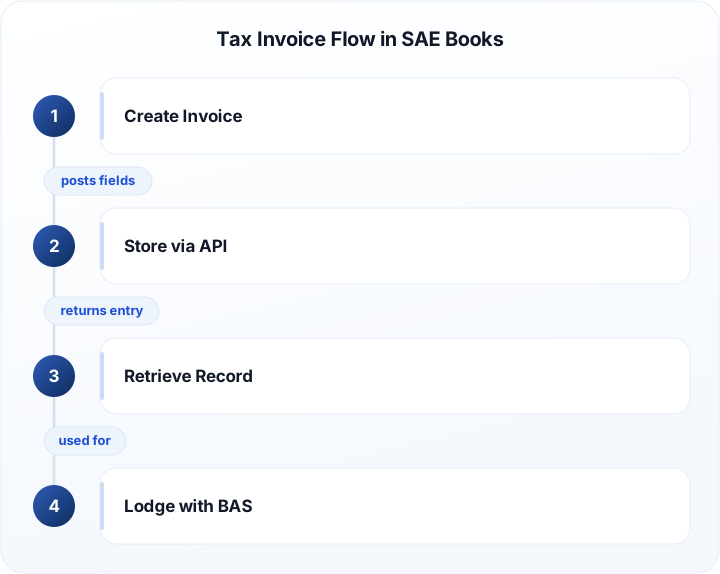
SAE Books stores each invoice as a structured ledger entry via its API. When an invoice is created, SAE Books captures the required GST fields — ABN, GST-inclusive amount, line-item descriptions, and issue date — so that the record satisfies ATO requirements from the moment it is written. Invoices can be retrieved, updated, or voided through the same API, giving businesses a single auditable source of truth for their tax invoice obligations.